

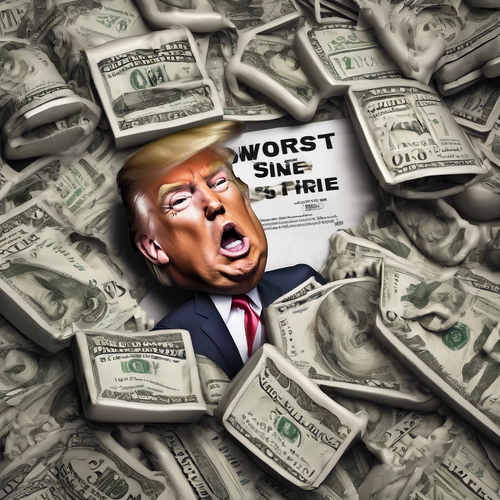
Wall Street Journal Critiques Trump’s Drug Price Control Expansion: A Deep Dive into Policy and Impact
The pharmaceutical industry finds itself at a crossroads as former President Donald Trump proposes an ambitious expansion of drug price controls, a move the Wall Street Journal openly condemns as possibly “the worst idea since tariffs.” While this may come as a surprise to Trump’s supporters, the implications of such a policy shift are profound, with potential consequences rippling through the healthcare system and the economy at large.💊
The purpose of these proposed drug price controls, which aim to cut costs for consumers and the government alike, reflects a growing frustration over rising pharmaceutical costs. According to recent reports, drug prices increased by more than 30% over the past five years alone, straining both public health budgets and household finances. But what lies beneath the surface of this well-intentioned proposal? An intricate web of economic realities and industry responses awaits unpacking.
The Mechanics of Drug Pricing
To understand the potential fallout of Trump’s plan, it is essential to grasp how drug pricing works in the U.S. system. Unlike many other countries, the U.S. lacks a uniform mechanism for negotiating drug prices, often leading to exorbitant costs driven by a combination of market dynamics and pharmaceutical marketing strategies. Pharmaceutical companies argue that high prices are necessary to fund research and development, with some estimates suggesting that they spend nearly $1.2 billion on average to develop a single new drug.💰
“Price controls do not lead to lower prices but to fewer innovations,” warns economic expert Dr. Alicia Greene. “The market requires a balance; without one, we risk diminishing the very innovations we hope to encourage.”
The Economic Implications
Critics of expanded drug price controls argue they will discourage investment, potentially leading to fewer new medications entering the market. Industry leaders emphasize that profits fund the critical research needed to develop treatments for prevalent conditions, from cancer to rare diseases. The National Institute for Health (NIH) reports that a mere 3% of drug candidates make it to market, underlining the high-stakes gamble faced by investors who bankroll pharmaceutical R&D efforts.📉
Economically speaking, implementing stringent drug price controls could incite serious pushback from pharmaceutical companies. Companies may react by cutting research budgets, laying off workers, or relocating to countries with a more favorable regulatory environment, thus potentially harming the economy further at a time when innovation is desperately needed to combat healthcare challenges.
Masks of Moderation: The Reality of Public Sentiment
Public sentiment increasingly reflects a desire for lower drug prices, ballooning healthcare costs becoming a shared concern across demographic lines. A recent survey revealed that 72% of Americans believe it is essential for the government to do something about high drug prices. Yet the challenge remains: How do we satisfy the urgent need for affordability while encouraging necessary innovation in the pharmaceutical space?🤔
A Crossroads of Policy
Trump’s proposal enters a complex landscape of healthcare reform, with lawmakers both in favor and opposed to price controls. The Biden administration has taken steps to facilitate Medicare’s ability to negotiate prices and extend health coverage, which has met with mixed reactions. Supporters tout it as progress, while opponents fear it may further entrench government involvement in healthcare.🏛️
If implemented, Trump’s price controls could overshadow existing negotiations, complicating the dynamics of healthcare policy across party lines. Add in the complexities of health insurance ramifications and future drug availability, and potential pathways forward quickly become muddied.
Industry Reactions: A Polarized Landscape
As expected, the pharmaceutical industry has pushed back against Trump’s suggestion, warning of potential repercussions that echo past reactions to previous regulatory changes. Many in the industry argue that price controls will lead to unintended shortages, impacting patient access to life-saving medications. The Pharmaceutical Research and Manufacturers of America (PhRMA) released a statement asserting that “price controls stifle innovation and threaten patient health.” The dichotomy of the debate accentuates the need for a balanced approach to reform that considers both affordability and research funding. 🩺
Alternative Solutions on the Horizon
In the midst of this debate over drug price expansions, alternative models exist that are being explored. Value-based pricing, for instance, ties medication prices to their effectiveness, ensuring that patients pay according to the therapeutic benefit derived. Initiatives such as increased transparency in pricing, coupled with efforts to promote generic drugs, also hold promise as potential avenues for meaningful cost reductions without sacrificing innovation.🔍
The Way Forward: Finding Common Ground
As Trump’s proposal simmers in the political cauldron, the solution may lie in collaboration—a coalition of lawmakers, pharmaceutical companies, and healthcare professionals coming together to negotiate terms that provide affordable healthcare without jeopardizing innovation. The question remains: Can such a coalition emerge as stakeholders weigh the costs of uncompromising positions in the face of mounting pressure?🤝
The stakes are high, and a solution will have lasting impacts on the healthcare landscape for years to come. Drug pricing is more than just a number on a bill; it represents access to health, vitality, and the ongoing quest for groundbreaking treatments. The need for pragmatic and multifaceted strategies has never been more apparent as we navigate the labyrinth of healthcare reform in America.



Im not convinced Trumps drug price controls are the answer. Big Pharma may suffer, but what about patients? Lets discuss.
I believe Trumps drug price controls could have unforeseen consequences. Lets discuss the economic impact further. What are your thoughts?
I cant believe the impact of Trumps drug price controls! Wall Street Journals critique really got me thinking. Whats your take?
Is Trumps approach to drug price controls really shocking? I think its time for a deeper dive into the economic implications. Lets discuss!
Im not convinced that Trumps drug price controls will have a shocking economic impact. The policy seems like a mixed bag.
Im not convinced that Trumps drug price controls will have a shocking economic impact. The policy seems risky.
I cant believe the conflicting opinions on Trumps drug price controls! Whos really looking out for the people here?
I think Trumps drug price controls could have unexpected consequences. Lets brace ourselves for a rollercoaster ride in the pharmaceutical industry!
Is Trumps drug price control really shocking or just a necessary economic move? Lets discuss the deep impact!
I cant believe the impact of Trumps drug price controls! Its like a rollercoaster – up and down, but wheres the stability?