

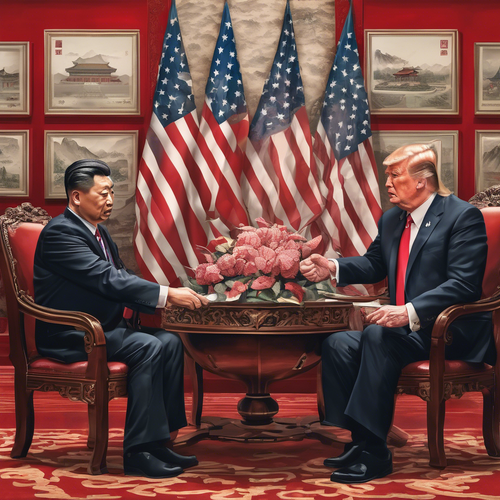
China’s Fentanyl Proposal: A Potential Game Changer in U.S.-China Trade Relations
The specter of fentanyl looms large in U.S.-China relations, and an audacious proposal from Beijing could be weighing heavily in discussions to rekindle trade talks. Reports suggest that the Chinese government may be considering tighter regulations on the production and export of fentanyl as a bargaining chip to reopen dialogues with the United States. As the opioid crisis continues to ravage communities across America, this unexpected offer has ignited a complex interplay of geopolitics, public health, and economic strategy. 💔
The Opioid Crisis: A Catalyst for Change
Fentanyl, a potent synthetic opioid, has been at the center of the U.S.’s growing drug epidemic, accounting for over 70,000 overdose deaths in 2021 alone, according to the Centers for Disease Control and Prevention (CDC). This staggering figure highlights the severity of a crisis that has significantly strained U.S.-China relations. The illicit manufacturing of fentanyl and its analogs predominantly occurs in China and Mexico, making international cooperation critical.
“The fentanyl crisis is not just a public health issue; it’s a national security concern,” states Dr. Sarah Thompson, a leading expert on substance abuse and addiction. “Finding a solution necessitates collaboration across borders.” 🌍
China’s Potential Offer: What It Means for Trade Talks
Amid rising tensions over tariffs, trade imbalances, and supply chain issues, Beijing’s tentative offer to discuss fentanyl regulation introduces a unique lever in negotiations. By addressing the opioid crisis publicly, Chinese officials may be aiming to reshape perceptions of their role in this epidemic and demonstrate a commitment to international cooperation.
Additionally, the United States bears its own accountability in this complex relationship. Providing insight, Drug Enforcement Administration (DEA) officials have noted that when regulatory measures are implemented in China, progress in controlling fentanyl production has been observed.
The Economic Stakes: A Double-Edged Sword
Economically, both countries have much to gain – or lose – in the unfolding discussions. The trade war has significantly impacted numerous sectors, leading to increased prices for American consumers and disruptions in manufacturing. American businesses are looking for stability, and a shift in China’s stance could pave the way for renewed trade agreements.
- New Markets: Easing tensions could open avenues for American products in the Chinese market, crucial for industries like agriculture and technology.
- Supply Chain Security: Reductions in tariffs could bolster supply chain resilience, ensuring swift access to resources while benefiting consumers.
- Public Health Costs: The economic burden of the opioid crisis on the U.S. healthcare system is astronomical, estimated at over $631 billion annually, embodying the urgent need for a solution.
Reactions from Washington: Scrutiny and Caution
Responses from Washington have been cautious, with politicians and policymakers urging careful consideration of any proposal from Beijing. Republican lawmakers have historically been skeptical of Chinese accountability surrounding drug trafficking, while Democrats face pressure to solve the ongoing opioid crisis. A bipartisan approach could be essential, yet fraught with political peril.
“We must prioritize the health and safety of our communities. While dialogue is essential, we cannot compromise on enforcement,” comments Senator Emily Ruiz, representing a district hard-hit by the opioid epidemic.
The Path Forward: Balancing Health and Trade
The landscape ahead is fraught with challenges, yet offers potential pathways to solutions that encompass both trade and health considerations. As the U.S. weighs an offer to curtail the fentanyl flow from China in exchange for trade concessions, critical questions arise:
- Can the U.S. ensure effective monitoring of fentanyl regulation if agreements are made?
- What mechanisms will be put in place to hold China accountable for compliance?
- How will these negotiations navigate the political implications of U.S. domestic drug policy?
An agreement to regulate fentanyl could serve both nations, addressing the pressing opioid crisis while opening doors to renewed economic ties. However, reaching a successful resolution will demand unwavering commitment, mutual cooperation, and clear communication aims aimed at fostering long-term benefits for public health and trade growth. The world watches as these often-complex players navigate a crisis that extends beyond borders. 🌐



I think Chinas fentanyl proposal could definitely shake things up in US-China trade, but lets not overlook the complexity of the opioid crisis.
I think Chinas fentanyl proposal could shake up trade relations. Its like a plot twist in a movie! What do you guys think?
I think Chinas fentanyl proposal could shake up US-China trade relations, but will it truly be a game changer? Lets wait and see.
I think Chinas fentanyl proposal could shake up US-China trade. Its a risky move with potentially big consequences. Lets see how it plays out.
I think Chinas fentanyl proposal could definitely shake things up in trade relations. Its like a wildcard in a high-stakes game!